Pool Tile Cleaning & Calcium/Scale Removal
Professional tile cleaning that removes stubborn calcium deposits and restores your pool's beautiful appearance
That white crusty buildup on your pool tile is more than just an eyesore. It is calcium scale, and it forms when your water chemistry is out of balance or your calcium hardness is too high. Over time, calcium deposits build up on your waterline tiles, making your beautiful pool look old and neglected. Regular brushing does not remove it, and household cleaners barely make a dent.
We specialize in professional pool tile cleaning and calcium removal. Our process removes even the most stubborn scale buildup without damaging your tile or pool surface. Whether your tiles have a light haze or thick white deposits, we have the tools and experience to restore them to like-new condition. Your pool will look cleaner, brighter, and more inviting after our tile cleaning service.
What Causes Calcium Scale Buildup?
Understanding why calcium builds up on your tiles helps you prevent future problems. Here are the main causes:
High Calcium Hardness
Calcium hardness measures the amount of dissolved calcium in your pool water. When calcium levels are too high, usually above 400 ppm, the excess calcium precipitates out of the water and deposits on surfaces. Hard tap water, evaporation, and certain pool chemicals all contribute to rising calcium levels.
High pH and Alkalinity
When your pH or total alkalinity runs high for extended periods, calcium becomes less soluble and more likely to form scale. Maintaining proper pH balance between 7.2 and 7.6 helps prevent calcium precipitation.
Evaporation and Splashing
Water evaporates from your pool constantly, especially in hot weather. When water evaporates at the waterline, it leaves behind dissolved minerals including calcium. This creates the characteristic white ring around your pool at the water level.
Poor Water Chemistry Maintenance
Inconsistent pool care allows water chemistry to drift out of balance. When you go weeks without testing and adjusting your water, calcium scale can form quickly. Regular weekly pool cleaning service prevents these imbalances and reduces scale formation.
Our Tile Cleaning Methods
We use several different methods to remove calcium scale depending on how severe the buildup is and what type of tile you have. Each method is safe and effective when used correctly:
Pumice Stone Cleaning
For light to moderate calcium buildup on hard surfaces like porcelain or ceramic tiles, we use professional-grade pumice stones. The pumice gently abrades the calcium deposits without scratching the tile surface. This method is effective, affordable, and works well for routine tile cleaning.
Bead Blasting
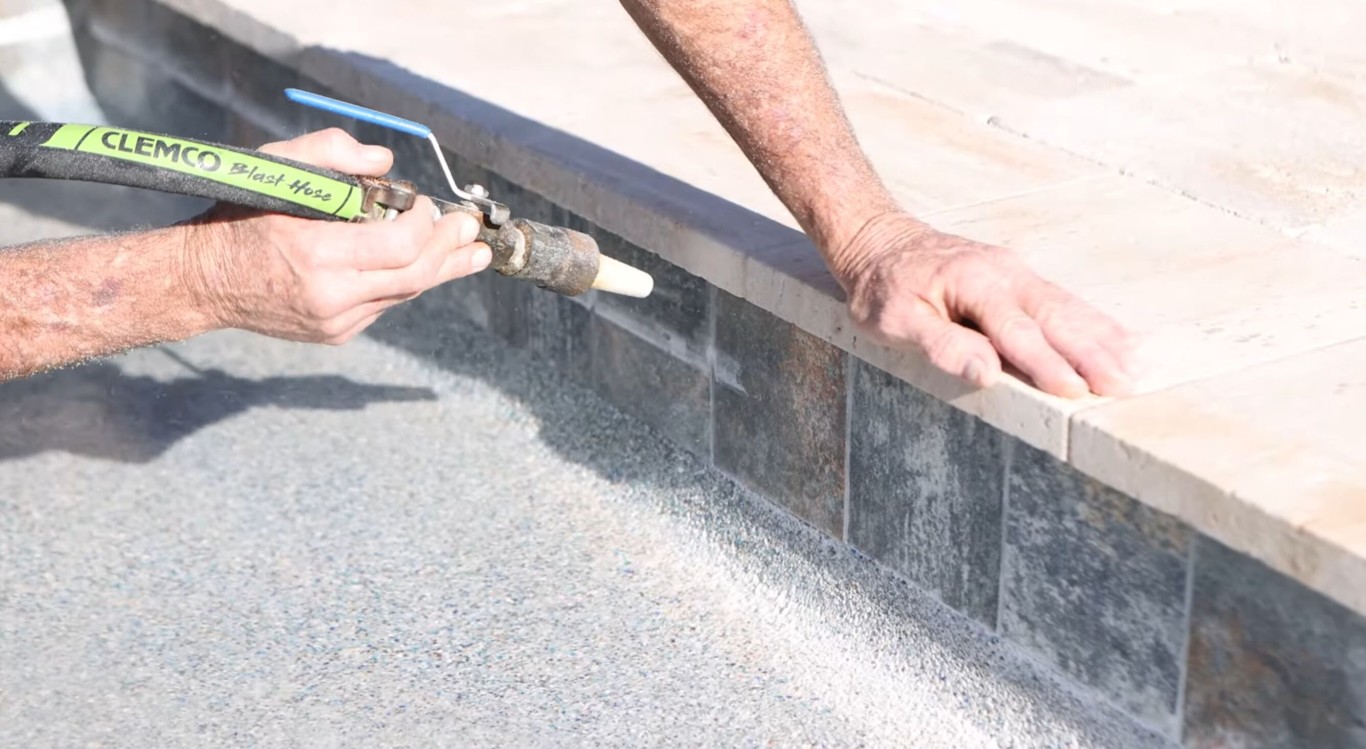
For heavy scale buildup or large areas, we use bead blasting equipment that shoots tiny glass beads at high pressure to remove calcium. This method is more aggressive than pumice and can clean large areas quickly. It works on all tile types and removes even the thickest scale deposits. We carefully control the pressure to avoid damaging softer tiles or grout.
Chemical Cleaning
For delicate tiles or in combination with mechanical methods, we use professional acid-based cleaners that dissolve calcium chemically. We apply these cleaners carefully to avoid damaging pool surfaces or affecting water chemistry. Chemical cleaning works well for textured tiles where mechanical methods cannot reach into grooves and crevices.
Pressure Washing
High-pressure water blasting can remove light scale and dirt buildup. We use this method for routine cleaning and as a final rinse after more intensive cleaning. Pressure washing alone is not effective for heavy calcium deposits, but it works well as part of a comprehensive cleaning process.
Benefits of Professional Tile Cleaning
Clean tiles do more than just improve your pool's appearance. Here is why tile cleaning is worth the investment:
- Improved Appearance: Clean, bright tiles make your entire pool look better. The difference is dramatic, especially if your tiles have not been professionally cleaned in years. Your pool will look like new again.
- Increased Property Value: If you are planning to sell your home, clean pool tiles significantly improve curb appeal. Potential buyers notice calcium buildup, and it makes your pool look poorly maintained even if everything else is in good condition.
- Prevent Permanent Damage: Severe calcium buildup can etch and damage tile surfaces permanently. Regular cleaning prevents this damage and extends the life of your tile work.
- Easier Future Maintenance: Once your tiles are professionally cleaned, regular brushing during weekly maintenance prevents new buildup from forming. Clean tiles stay cleaner longer.
- Better Water Quality: Calcium scale can harbor bacteria and algae, making it harder to maintain clean water. Removing scale eliminates these hiding spots and improves overall pool hygiene.
Visit our homepage to see before and after photos of tile cleaning projects we have completed for homeowners throughout Montebello and surrounding areas.
Preventing Future Calcium Buildup
After we clean your tiles, you want to keep them looking great as long as possible. Here is how to prevent calcium from building up again:
First, maintain proper water chemistry. Keep your pH between 7.2 and 7.6, and maintain calcium hardness between 200 and 400 ppm. Test your water weekly and make adjustments as needed. If you are on our weekly service, we handle this automatically during every visit.
Second, brush your tiles regularly. Weekly brushing removes calcium deposits before they harden and become difficult to remove. Use a tile brush, not a wall brush, for best results.
Third, consider using a calcium reducer or sequestering agent if you have hard tap water. These products keep calcium dissolved in the water and reduce scale formation. We can recommend the right products for your situation.
Finally, schedule professional tile cleaning every 1 to 3 years depending on your water hardness and how quickly scale builds up. Regular professional cleaning is much easier and less expensive than waiting until your tiles are covered in thick deposits. If you also notice issues with your pool equipment or filtration, check out our equipment repair services.